


#182: Can acupuncture help with menopause symptoms?
 von The Women Circle
23 Ansichten
6 Minuten gelesen


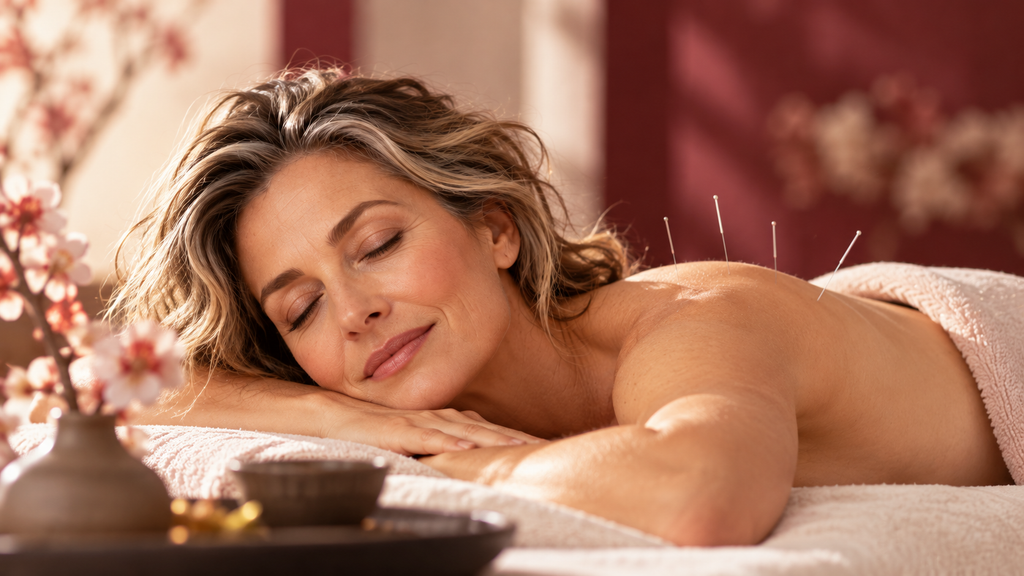
You would like fewer hot flushes, better sleep or less inner restlessness without adding another medicine. Perhaps someone has suggested acupuncture. Individual women may feel better, but research has not clearly shown that needling works substantially better than sham acupuncture for menopause symptoms. A time-limited trial may be reasonable if you keep realistic expectations and do not postpone medical assessment.
What is acupuncture?
Acupuncture inserts very fine needles into selected points in the skin. It developed within traditional Chinese medicine, which explains it through concepts such as qi and meridians. These concepts are not equivalent to modern anatomical and physiological explanations.
Research is exploring whether needle stimulation affects nerves, pain processing or chemical messengers. A plausible mechanism does not prove that acupuncture reliably improves a menopause symptom. That requires fair comparisons with sham acupuncture or another treatment.
Can acupuncture ease menopause symptoms?
Hot flushes and night sweats have been studied most often. Some trials report improvement against no treatment, but the difference often becomes small or disappears against sham acupuncture. Attention, rest, expectations and the natural rise and fall of symptoms may explain part of the change.
Feeling better is not imaginary. If it matters in daily life, it is relevant. Research cannot tell us how much comes from particular points or needle depths. Acupuncture is a possible complementary option, not a proven replacement for effective care.
Which symptoms have the clearest evidence?
For hot flushes, a Cochrane review found no clear difference between real and sham acupuncture in frequency. Severity showed a small advantage, but confidence was very low. In 2023, a North American menopause society did not recommend acupuncture as an evidence-based treatment for vasomotor symptoms.
For menopause-related insomnia, newer studies suggest better self-reported sleep quality. Results vary considerably, trials are often small and follow-up is short. Evidence for mood, anxiety, pain and quality of life cannot support a broad promise.
Why is the research difficult to interpret?
It is hard to create a convincing placebo. Shallow needles or needles away from traditional points still produce sensations. Practitioners usually know which technique they deliver. Expectations, the therapeutic relationship and attention may influence outcomes.
Trials use different points, techniques, session numbers and questionnaires. Some involve natural menopause, others cancer treatment. The claim that ‘studies show it works’ is incomplete unless it names the symptom, comparator and certainty of evidence.
What can you do now?
If you want to try acupuncture, make it a simple and measurable experiment:
- Choose one main symptom and rate it for seven days before you start.
- Ask about training, menopause experience, sterile needles, costs and the planned sessions.
- Agree when you will review progress, using the same scale each time.
- Continue recommended treatment. Do not change medicines or hormones without advice.
What may help over time?
Match treatment to the symptom. For troublesome hot flushes, a consultation can cover hormone replacement therapy, suitable non-hormonal medicines and menopause-specific cognitive behavioural therapy. For poor sleep, consider night sweats, sleep apnoea, low mood, alcohol, caffeine and medicines.
Acupuncture can stay in your plan if it helps, is affordable and does not displace effective care. If the agreed trial brings no meaningful improvement, stopping is sensible. More sessions are not automatically better.
When should you take extra care?
Temporary soreness, bruising, tiredness or minor bleeding can occur. Infection and internal injury are rare. Tell the practitioner about anticoagulants, bleeding disorders, pregnancy, implants or a pacemaker, particularly before electroacupuncture.
Seek assessment for new, severe or persistent symptoms. Acupuncture does not replace investigation of bleeding after menopause, chest pain, breathlessness or neurological symptoms.
What does the research say?
The Cochrane review of acupuncture for hot flushes included 16 trials and 1,155 women. Across eight trials involving 414 women, hot flush frequency did not differ clearly between real and sham acupuncture. Severity was slightly lower with acupuncture, but the certainty of that evidence was rated very low.
A newer review of acupuncture for menopausal insomnia analysed 28 randomised trials. Six sham-controlled trials with 428 participants reported better sleep scores with acupuncture. The results were highly inconsistent and follow-up was short. Overall, individual benefit is possible, but the evidence does not support a confident general recommendation.
Further reading and scientific sources
- The Women Circle: understanding hot flushes and what may help
- Elektra Health: can acupuncture help with menopause symptoms?
- PMC: Cochrane review of acupuncture for menopausal hot flushes
- PMC: systematic review of acupuncture for menopausal insomnia
Your step for this week
| Choose one symptom and observe it for seven days. Record its frequency, severity from 0 to 10 and effect on daily life. If you try acupuncture, take this baseline to your first appointment and agree a date to review whether it is helping. |
|---|
A sound decision stays open to your experience, checks the effect honestly and never leaves an important symptom waiting.


